
CFA · Painting, Sculpture, Drawing
Certificate of
Fine Arts
(CFA)
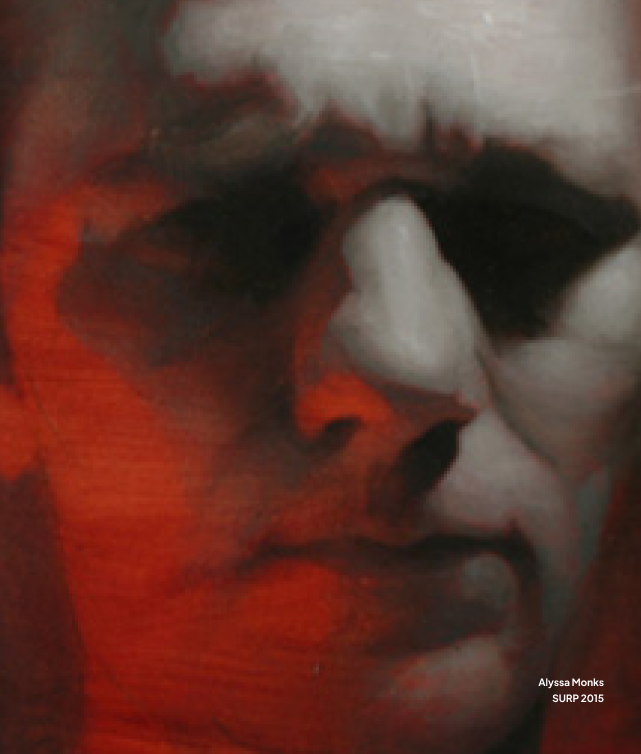
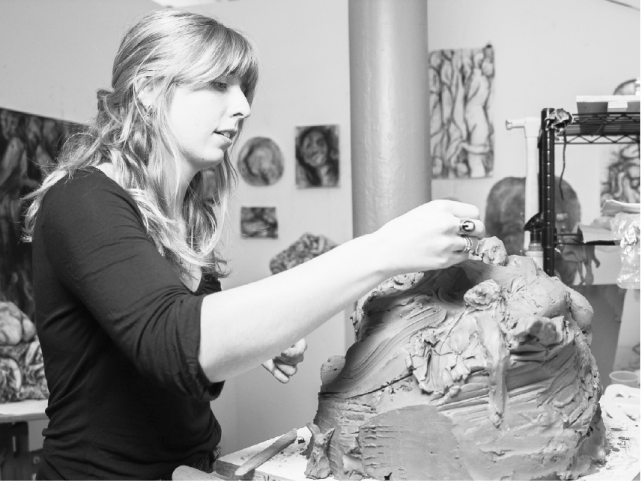
Holly Lowen
SURP 2015
A one-year, studio-based program designed to prepare artists for graduate study and focused professional development.
Program Snapshot
DURATION
1 year
CREDENTIAL
Certificate
FORMAT
Full-time,
In-person
VISA ELIGIBLE
Yes (F-1)
DEADLINE
January 15th
MFA PATHWAY
Yes
Program Overview
A Year to Refine Your Craft in the Heart
of the Art World
The CFA is a focused year of intensive studio practice designed to strengthen both technical ability and conceptual direction. Students develop their work through sustained studio time, faculty critique, and engagement with contemporary discourse.
Working across drawing, painting, and sculpture, students refine their skills while building a portfolio that reflects a clear and developing artistic voice.
“The CFA is where I learned the difference between making images and building a practice. Day after day in the studio, with critiques that actually mean something, you stop making excuses and start making work.”
— Daniel Okafor, CFA ’24
Who Is This For?
The CFA is for…
The Pre-MFA Artist
You want to apply to competitive MFA programs but need time to strengthen your portfolio and refine your direction.
The International Student
You are seeking a focused, visa-eligible year of study in the U.S. with the flexibility to continue into graduate education.
The Practicing Artist
You are looking to deepen your work, explore new directions, or re-engage your practice within a structured, rigorous environment.
Curriculum and
Structure
The CFA is a one year, three-semester, program designed to move from foundational studio training to independent, portfolio-driven work.
Students work across drawing, painting, and sculpture while developing an understanding of art history, theory, and professional practice. Each student is paired with a faculty advisor who provides guidance throughout the program.
Semester One,
Fall
The CFA is a one year, three-semester, program designed to move from foundational studio training to independent, portfolio-driven work.
Students work across drawing, painting, and sculpture while developing an understanding of art history, theory, and professional practice. Each student is paired with a faculty advisor who provides guidance throughout the program.
CFA – A502 | Anatomical Drawing
The purpose of this course is to equip the student with a fundamental understanding of the anatomy, structure, and design of the human body. The students will be presented with historic principles of artistic anatomy which emphasize an accurate, geometric interpretation of the underlying skeletal structure of the body as well as a thorough examination of surface musculature in an effort to draw the figure with greater clarity, confidence, and accuracy.
3 credits
Core Learning Outcomes
- A number of completed life drawings and anatomical studies of the live figure model
- Understanding of various drafting strategies used to represent a structured human form from both historical and contemporary sources
- The ability to seek out the various anatomical structures of the human figure and incorporate them into their work with greater confidence and conviction, both observation and memory
CFA – D501 | Drawing I
This course begins the process of developing the student’s ability to represent the human figure in pictorial space, clearly situated on a perspective ground plane. Emphasis is placed on gaining an in-depth understanding of the body’s underlying geometry and anatomical structure. A conceptual model of the figure that addresses volume, movement, proportion, perspective and light, is developed by correlating students’ drawing from observation with master drawings and diagrams that present the body as a series of interlocking volumes governed by hierarchical principles. Students work from casts in the Academy’s collection to reinforce and enhance drawing comprehension and skills. Instruction will emphasize the integration of the lessons from cast drawing and life drawing. Students will engage in self-directed work to explore and extend the forms, techniques, content and possibilities of drawing. Regular critique sessions are designed to inform and provide positive support to this self-directed work.
3 credits
Core Learning Outcomes
- Improved accuracy of transposing visual phenomena to the page
- Accelerated abilities in observation, control and development in life drawing
- Enhanced understanding of strategy in drawing
- A personal focus, moving forward, for growth
CFA – P501 | Painting I
This course examines the language and techniques of direct painting from the figure, still life and plaster casts. Students will paint using a variety of strategies derived from current and historical practice. Direct painting has been the method of choice for figurative painting in the modern era, but other techniques are encountered in the history of western art, often as foundations or reference studies for more layered development. Theoretical approaches to tonal structure and color theory will be addressed in depth. While emphasis in this course is on analytical seeing/interpreting, self-directed work plays a significant role. By providing a classroom structure for the review of independent work, the course achieves a vital dialogue between the method of direct painting and the myriad intentions of the artist.
3 credits
Core Learning Outcomes
- Understanding of historical and current uses of direct painting
- Better control of values, edge handling, and color to create projection and recession through direct painting
- Understanding of color theory as it relates to the properties of oil pigments: Hue, Value, Chroma, and Temperature
- Ability to translate value to color
- Understanding of palette organization
- Understanding of how to work from bigger forms to smaller forms
- Understanding of Brush Handling
- Knowledge in creating successful compositions
- Knowledge of varied textures in work
CFA – S501 | Sculpture I
Through observation of the live model, drawings from classic texts, and demonstrations by the instructor, this course provides knowledge of linear and horizontal proportions, planar and mass relationships, axis lines, bony landmarks, overall human anatomy, surface treatment, patinas, and composition, as well as tools and techniques for sculpting the human form. Taken together, this knowledge is intended to give students greater clarity when interpreting the human form in drawing, painting, and sculpture. Also, through a class museum trip, occasional exhibition assignments, and class discussion, the course is intended to shed some light on the historical contexts surrounding the students’ own bodies of work.
3 credits
Core Learning Outcomes
- Skills in sculpting—and, by extension, in drawing and painting—the human form, as well as understanding of what student’s would like to convey in their own bodies of work
- Essential knowledge of human proportions, anatomy, axis lines, planar and mass relationships, and composition, as well as of materials and techniques for manifesting 3-dimensional form
- Understanding of how the work addresses the history of ideas and human endeavor in art
Semester Two,
Spring
Advance technical ability while beginning to define your direction as an artist.
CFA – D502 | Drawing II
This course emphasizes proportional accuracy, foreshortening, detail-mass relationships and the use of light and shadow to draw the figure as a convincing volumetric and spatial form. It integrates the conceptual geometricized model presented in Drawing I with the perceptual, naturalistic concerns presented by the live model. Long poses allow the student to develop drawings that reflect a more complete realization of the human form.
3 credits
Core Learning Outcomes
- A specialized foundation for more advanced coursework
- A more holistic approach to drawing by interpreting form in the human body
- Explore in depth regions of the figure which are challenging to draw
- Technique in red chalk
- A greater understanding of drawing’s potential power through editing
- Understanding of mark making to forge a more effective strategy
- A reaffirmation of drawing from direct observation as vital to proficiency in visual problem solving
- Ability to incorporate museum research, as in the study of hatch mark, to build a more sophisticated handling within the drawing discipline
CFA – P502 | Painting II
This is a course in optical mixing of color through layering, the common painting method in pre-modern times and gaining in acceptance among contemporary artists. Students paint using underpainting (imprimatura), glazing and scumbling techniques. Through this method of episodically building up a painting, students are able to address a variety of problems in sequential fashion and indirect painting becomes a valuable resource for students’ independent studio work. Projects in this course include self-directed assignments and instructed classroom figure painting.
3 credits
Core Learning Outcomes
- Basic knowledge of how to construct an oil painting utilizing indirect painting techniques
- A finished grisaille painting
- Understand layering semi-opaque and transparent layers of oil paint
- Practice of painting from life
- Understanding of anatomy and form
CFA – H501 | Art History I
This course covers the development of art forms from the Renaissance to the late 19th century. Emphasis is on content, terminology, design, and style. Upon completion, students will be able to demonstrate an historical understanding of art as a product reflective of human social development. This course includes but is not limited to the art of the Renaissance and Baroque periods, Romanticism and Impressionism.
3 credits
Core Learning Outcomes
Ability to define the major art movements from the end of the Medieval period through post-Impressionism
Ability to recognize major works of art from each of these movements
Appreciation of the ways in which art of each period reflected socio-political and religious events
Ability to define key art historical terms used in scholarly discussion of art (e.g., foreshortening, vanitas, Naturalism, contrapposto pose, etc.)
A formal visual analysis on a piece of art chosen by the instructor that is also of interest to the student
Experience in close-looking and writing about specific artworks to be discussed in the Cloisters, the Metropolitan Museum of Art, and the Museum of Modern Art
Elective One
In the second semester, students select one elective course based on their area of interest. Electives provide students with the opportunity to enrich their core curriculum and gain experience with new concepts and techniques.
3 Credits
Semester Three — Summer
Focus on the development and exhibition of a cohesive body of work.
CFA – I501 | Independent Project
Students are assigned a studio for their independent work on their Independent Project in the beginning of their third semester. Students are expected to produce a body of work, which is exhibited at the end of the third semester. They meet with their advisors, individually, four times throughout this semester to review progress on their work and receive constructive feedback.
Each student is required to complete a written Artist Statement in support of his or her final CFA Independent Project. The Artist Statement is meant to place the student’s work into the context that is intended by the student, explaining personal significance or goals for the work, historical, cultural or artistic points of reference, techniques or methods used and their intended purpose in the production of the student’s work. Students are required to present this written statement during Final Critiques of the Independent Project, its exhibition and accompanying Artist Statement are is considered part of the CFA candidate’s evaluation.
6 credits
Core Learning Outcomes
- The individual student, in consultation with Independent Project Committee, agrees upon the scope of the work to be completed for the Independent Project and the required, accompanying written statement.
- The student meets with their Independent advisors, individually, three times throughout this semester to review progress on their work and receive constructive feedback.
- Each student is required to complete a written Artist Statement in support of his or her final CFA Independent Project. The Artist Statement is meant to place the student’s work into the context that is intended by the student, explaining personal significance or goals for the work, historical, cultural or artistic points of reference, techniques or methods used and their intended purpose in the production of the student’s work.
- Students are required to present this written statement during Final Critiques of the Independent Project. The Independent Project, its exhibition and accompanying Artist Statement are considered part of the CFA candidate’s evaluation.
CFA – H502 | Art History II
The course discusses the issues and art movements of the late nineteenth century to the present, moving from the primarily Eurocentric perspective of Post Impressionism, Fauvism, Futurism, Constructivism, Dada, Surrealism, and Abstract Expressionism to contemporary art as global phenomenon. Consideration is given to the diversity of artistic expressions in this period within their cultural, theoretical, and political contexts. Particular attention is given to the impact on art of such late 20th- century cultural phenomena as feminism, transgender and queer identity politics, race and ethnicity, multiculturalism, environmental awareness and climate change, the AIDS epidemic, the explosion of the media and technology (video to the Internet), and to the ways in which these phenomena have spawned new definitions of art (Relational Aesthetics and Social Practice).
3 credits
Core Learning Outcomes
- Ability to define the major art movements from the end of post-Impressionism to the contemporary period
- Ability to recognize major works of art from each of these movements
- Appreciation of the ways in which art of each period reflected socio-political and religious events
- Ability to define key art historical terms used in scholarly discussion of art (e.g., Surrealism, Color Field Painting, Abstract Expressionism, Photorealism, etc.)
- A formal visual analysis on a piece of art chosen by the instructor that is also of interest to the student
- Experience in close-looking and writing about specific artworks in the Whitney, the Brooklyn Museum, and the Museum of Modern Arta
Students are paired with a faculty advisor who meets with them at key points throughout the program. These sessions provide individualized guidance, helping students refine their goals, track progress, and successfully complete their final project.
Program
Structure
Lorem ipsum dolor sit amet, consectetur adipiscing elit. Ut elit tellus, luctus nec ullamcorper mattis, pulvinar dapibus leo.
Lorem ipsum dolor sit amet, consectetur adipiscing elit. Ut elit tellus, luctus nec ullamcorper mattis, pulvinar dapibus leo.
Content waiting definition by NYAA team
Curriculum
Lorem ipsum dolor sit amet, consectetur adipiscing elit. Ut elit tellus, luctus nec ullamcorper mattis, pulvinar dapibus leo.
Lorem ipsum dolor sit amet, consectetur adipiscing elit. Ut elit tellus, luctus nec ullamcorper mattis, pulvinar dapibus leo.
Content waiting definition by NYAA team
Content waiting definition by NYAA team
Content waiting definition by NYAA team
Content waiting definition by NYAA team
Outcomes & Alumni
CFA Alumni
Andrea Olivia
Anna Park
Korbyn Carleton
Michael Weiss
Student Work
Same Faculty as Our MFA

Nina Levy
Director · Sculpture

Wade Schuman
Director · Painting

Michelle Grimaldi
Drawing & Anatomy

Perla Michaels
Provost
Explore the Campus
Lorem ipsum dolor sit amet, consectetur adipiscing elit. Ut elit tellus, luctus nec ullamcorper mattis, pulvinar dapibus leo.
Lorem ipsum dolor sit amet, consectetur adipiscing elit. Ut elit tellus, luctus nec ullamcorper mattis, pulvinar dapibus leo.
DrawingLorem ipsum dolor sit amet, consectetur adipiscing elit. Ut elit tellus, luctus nec ullamcorper mattis, pulvinar dapibus leo.
DrawingLorem ipsum dolor sit amet, consectetur adipiscing elit. Ut elit tellus, luctus nec ullamcorper mattis, pulvinar dapibus leo.
Explore the Campus
Lorem ipsum dolor sit amet, consectetur adipiscing elit. Ut elit tellus, luctus nec ullamcorper mattis, pulvinar dapibus leo.
Lorem ipsum dolor sit amet, consectetur adipiscing elit. Ut elit tellus, luctus nec ullamcorper mattis, pulvinar dapibus leo.
DrawingLorem ipsum dolor sit amet, consectetur adipiscing elit. Ut elit tellus, luctus nec ullamcorper mattis, pulvinar dapibus leo.
DrawingLorem ipsum dolor sit amet, consectetur adipiscing elit. Ut elit tellus, luctus nec ullamcorper mattis, pulvinar dapibus leo.
Tuition & Financial Aid
Lorem ipsum dolor sit amet, consectetur adipiscing elit. Sed do eiusmod tempor incididunt ut labore et dolore magna aliqua ut enim ad minim veniam quis.
Learn more
How to Apply
Application Checklist
1
Submit Online Application
Via the NYAA Applicant Portal
2
Portfolio (15-20 works)
Digital images, any medium
3
Statement Purpose
500–750 words
4
Transcripts
Official copies, all institutions
Alyssa Monks
SURP 2015
Ready to Begin?
Visit the NYAA campus